


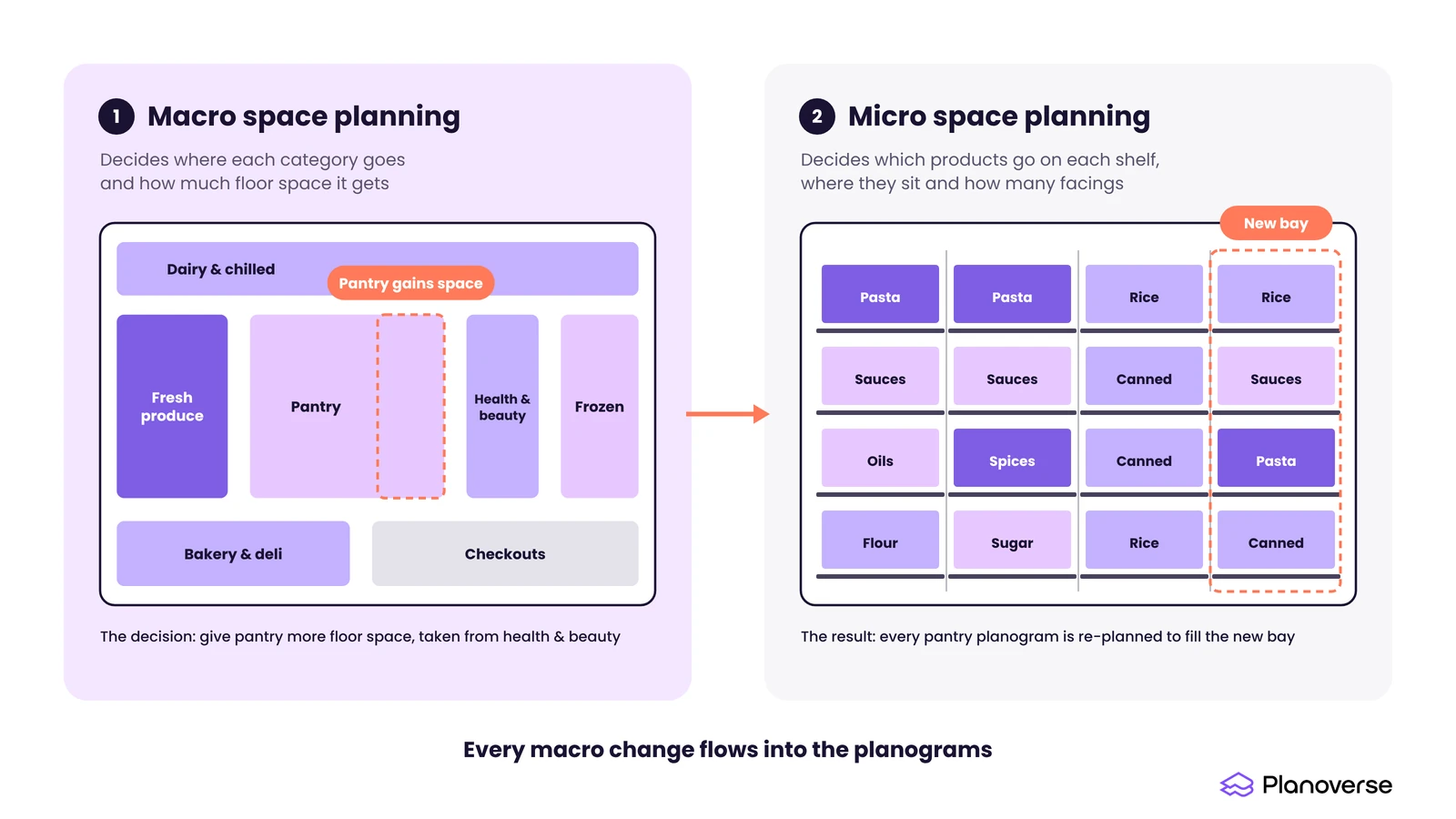
Retailers plan a store refit at two levels. Macro space planning sets the store layout: where each category sits, how much space it gets, its adjacencies and how shoppers move through it. Micro space planning sets the shelf: planograms, product placement and facings. Because every macro change flows into the planograms, the best plans test both together, using the store's own sales data, before work starts.
What Is a Store Refit?
A store refit is a planned upgrade to a store's layout, fixtures or equipment. It can be as small as new fridges and lighting, or as large as a new layout with new shelving, checkouts and services.
The bigger the change, the more planning it needs. New equipment may change how the store looks and runs. A new layout changes where each category sits and how much floor space it gets, so it needs both macro and micro space planning.
Woolworths' Casuarina store renewal in the Northern Territory is an example. Fresh, the bakery and the online hub all get more floor space, and the fresh range grows by 1,200 products. Changes on this scale affect the shelves as well as the floor plan.
Why Do Retailers Need a Store Refit?
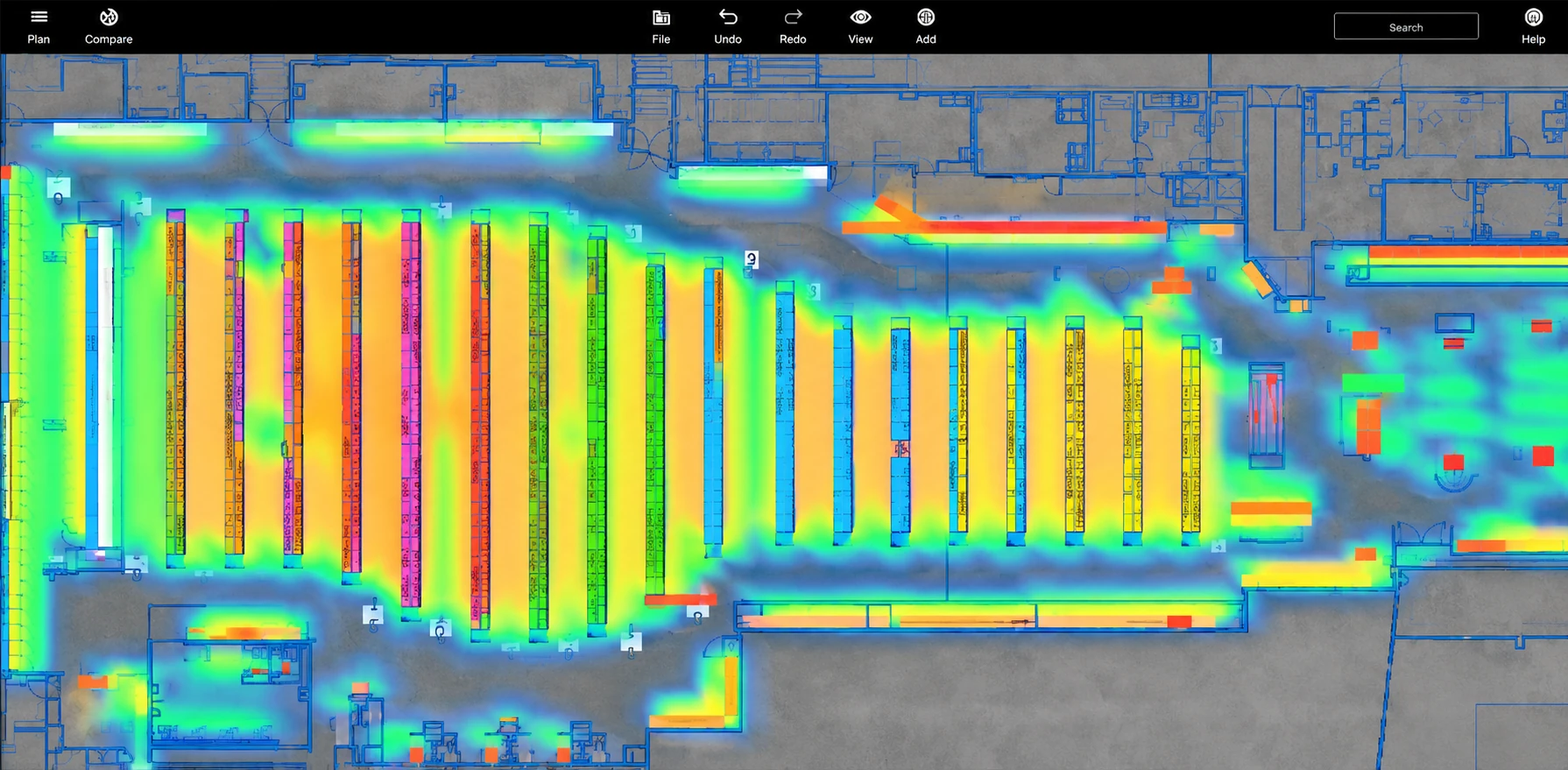
Planoverse turns store data into a heatmap of how shoppers move
Retailers refit stores to keep them in step with how people shop. Over time, fixtures wear out, ranges change, online orders need floor space and stores change hands. A refit resets the layout around those demands, so the store is easier to shop and sells more from the same space.
The payoff can be significant, especially with new shoppers. A Journal of Marketing study reported by Monash University found that after a major remodel, sales to new customers rose 43–44%, compared with 7–10% for existing customers.
How much of the store changes matters too. Dollar General reports a first-year same-store sales lift of about 3% from its lighter remodels and about 6% from its fuller ones. In Australia, Coles' CFO says store investments deliver "very strong returns on capital", which helps explain why so many stores are being refitted right now.
Why Is Australia Going Through So Many Refits?
Australia's largest retailers are reshaping their stores around online orders, new formats and, in one case, a new owner.
Coles has marked 150 supermarkets for major refurbishment by June 2028, within a $300 million capital budget. With online now making up nearly one-sixth of supermarket sales, its renewals add wider aisles for team members picking orders and more parking for click-and-collect. Coles is also bringing food and drink closer together, with more Liquorland stores next to its supermarkets.
Woolworths renewed 67 Australian stores in FY26. It describes a renewal as "a total store transformation focused on the overall store environment, team, range and process efficiency (including digital)". Dollarama is converting a reported 60 to 80 The Reject Shop stores this year, after buying the business in July 2025. The red and yellow branding is being replaced with Dollarama's green and yellow, and stores are getting wider aisles, brighter lighting and more products on shelf.
Aldi is rolling out a new store format across Australia, Germany, the UK and Ireland as part of a global growth strategy. It uses one modular design that adapts to different store sizes, with signage, layout and merchandising redesigned around the Aldi Specials range.
The reasons differ, but the challenge is the same: each retailer has to fit a new plan to stores that differ in size, shape and customer.
What Decisions Need to Be Made Before a Refit Starts?
The big decisions are where each category sits, how much space it gets, and what the store needs to do that it couldn't before. Floor space is expensive, so categories that underperform give space back to the ones that earn more.
A store's shoppers don't stay the same. Between one refit and the next, the surrounding suburb can get older or younger, and its households and cultural mix can shift. A layout that suited the community five years ago may not suit it today. Before any space is reallocated, each store needs to understand its own catchment: who lives there now, how that has changed, and what they buy. That's how a refit caters to local shoppers and gets the most out of every square metre.
Coles, for example, has matched its store formats to local affluence. Stores in higher-income areas get a premium format, while stores in lower-income areas get a simpler one that swaps delis and bakeries for pre-packaged meat and bread.
Local shoppers can shape the physical store as well as the range. German supermarket chain Kaiser's converted stores for older shoppers, widening aisles, moving products within easy reach, enlarging price labels and adding seats to trolleys.
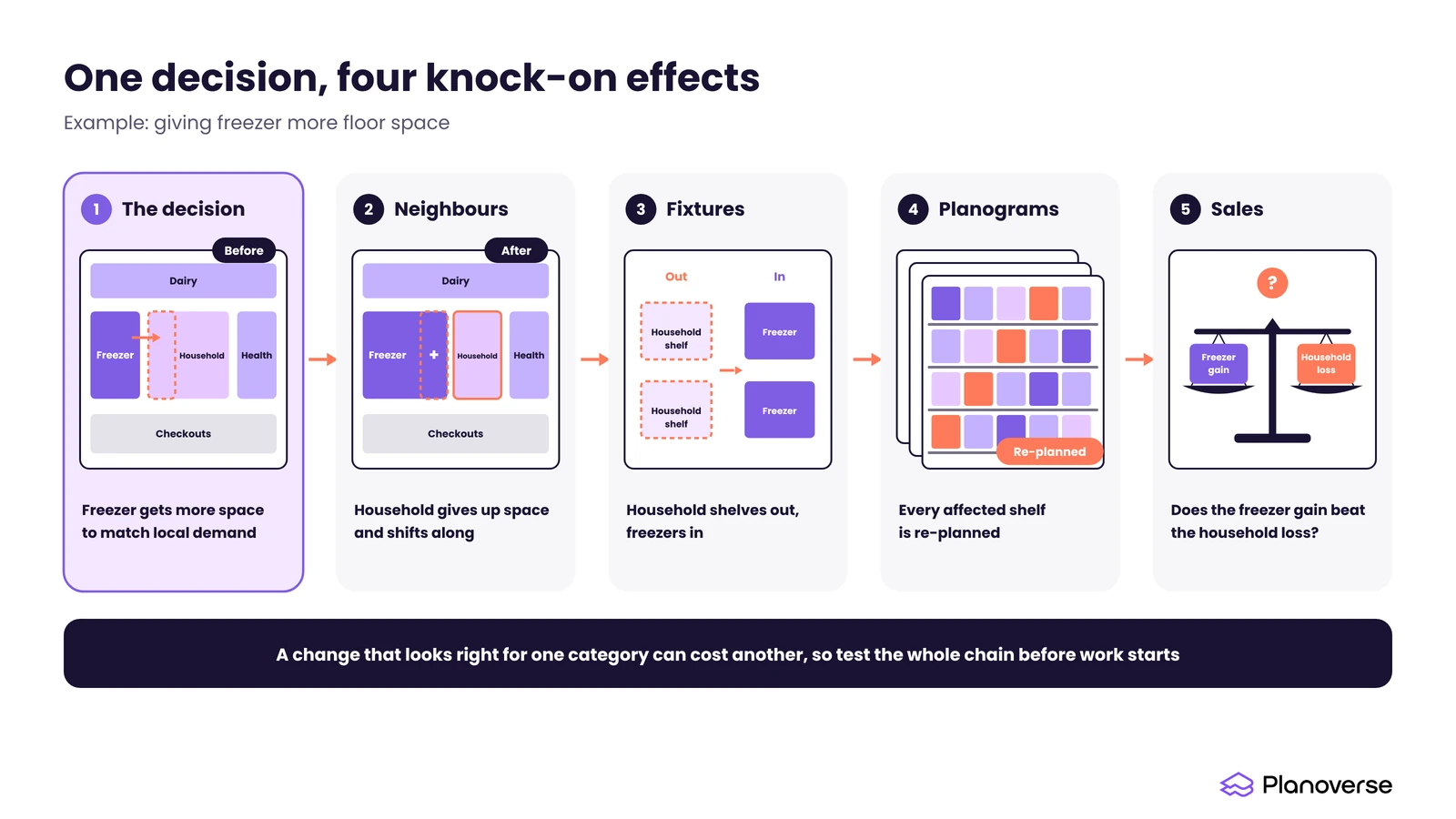
These decisions affect each other: a change that looks right for one category can cost another, and once fixtures are moved, mistakes are expensive to undo. That's why the full plan needs to be tested in a safe environment, where options can be compared and adjusted before anything changes in store.
How Do You Simulate a Refit and Predict Its Impact?
Simulate the options in a 3D digital twin of the store before any physical work begins. A plan is far easier to change on screen than once construction has started.
With Planoverse, each store's 3D twin is built from its own CAD, BIM or Revit files and linked to its planograms, ranges and category sales, bringing every asset in the store into the same view. Macro and micro space planning sit in one platform, so teams see how the current space performs, where it falls short, and how a change on the floor affects sales.
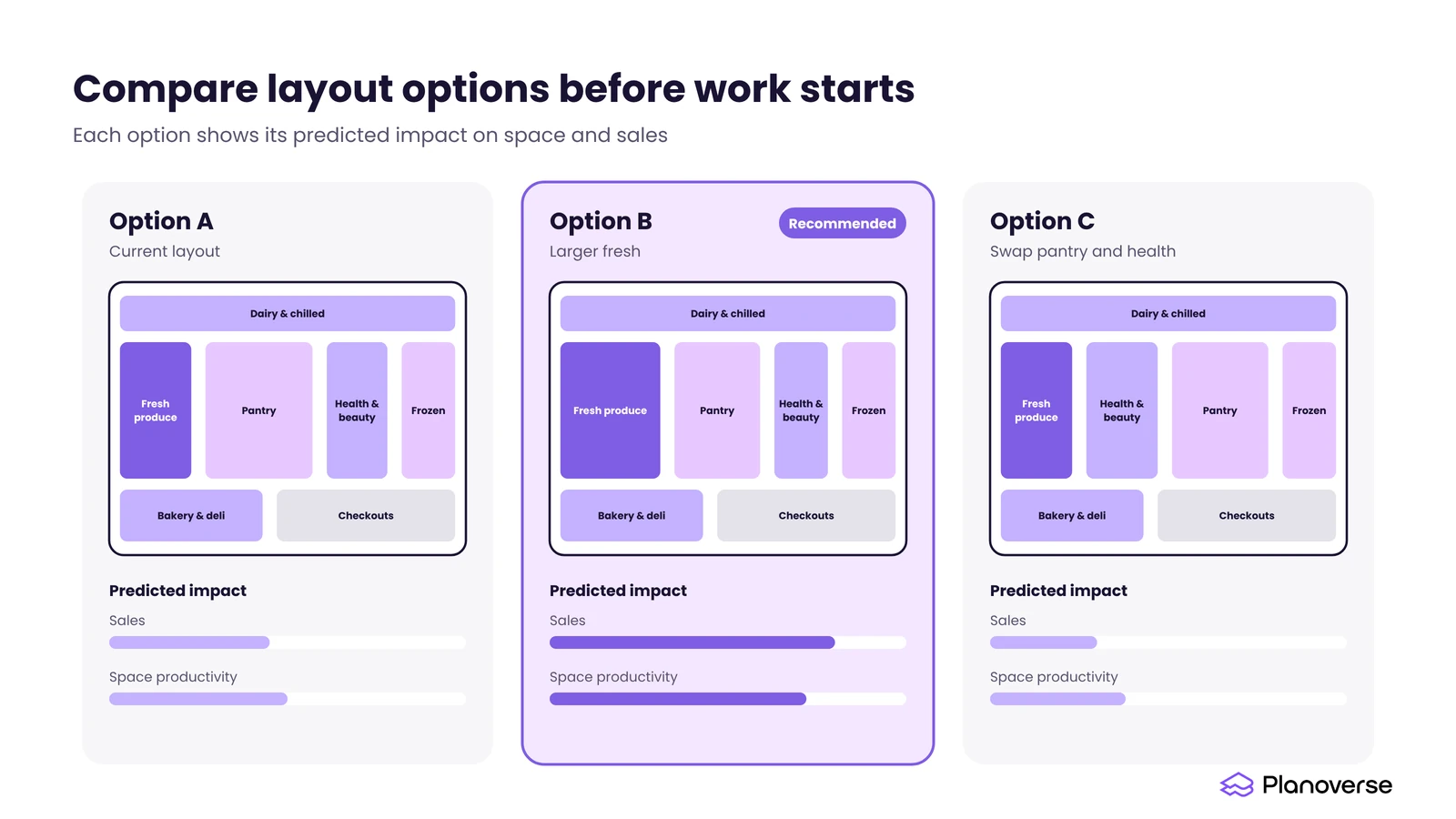
Planoverse then generates layout options from the store's own data. Teams compare them side by side, each with its predicted impact on space and sales, and simulate the full refit, from category moves and new fixtures to in-store media placements. Stakeholders and head office walk through each option virtually and raise issues while they're still easy to fix. The agreed layout is finalised in the twin before it's carried out in store.
A refit locks in decisions that shoppers and store teams live with every day until the next one. Planoverse lets retailers make those decisions with the full picture of each store in front of them.
See how it works for your stores. Book a demo